A Calm Approach, Shared

What partnership on food habits can look like

Exhibit: Everyday UK Scenes

Real moments that shape how we eat and feel. Partnership starts with recognising these everyday choices.

Woman shopping for fresh groceries, holding a list in supermarket
Intentional Choices
Planning ahead with a list. Small moments of clarity that matter.
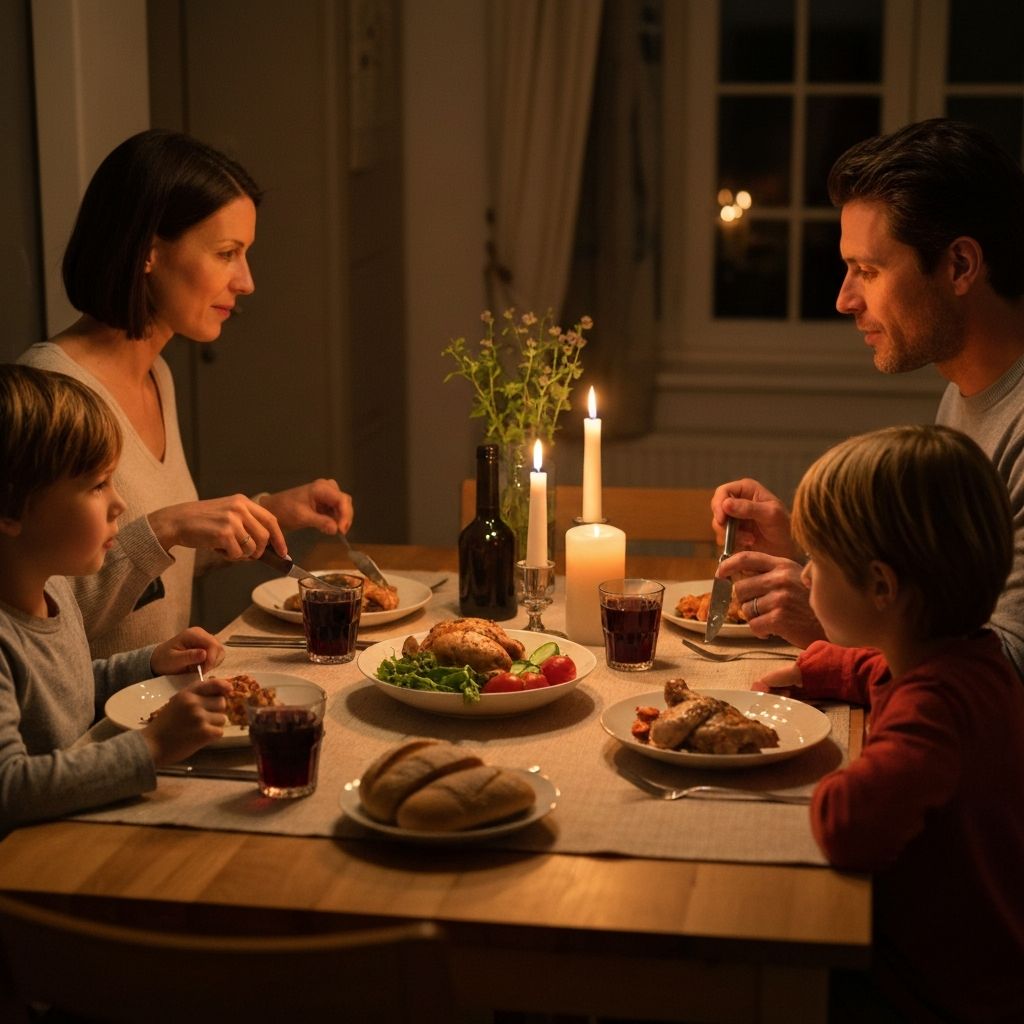
Home-cooked family dinner with simple wholesome food
Home Routines
Cooking at home with simplicity. Nourishing yourself without pressure.
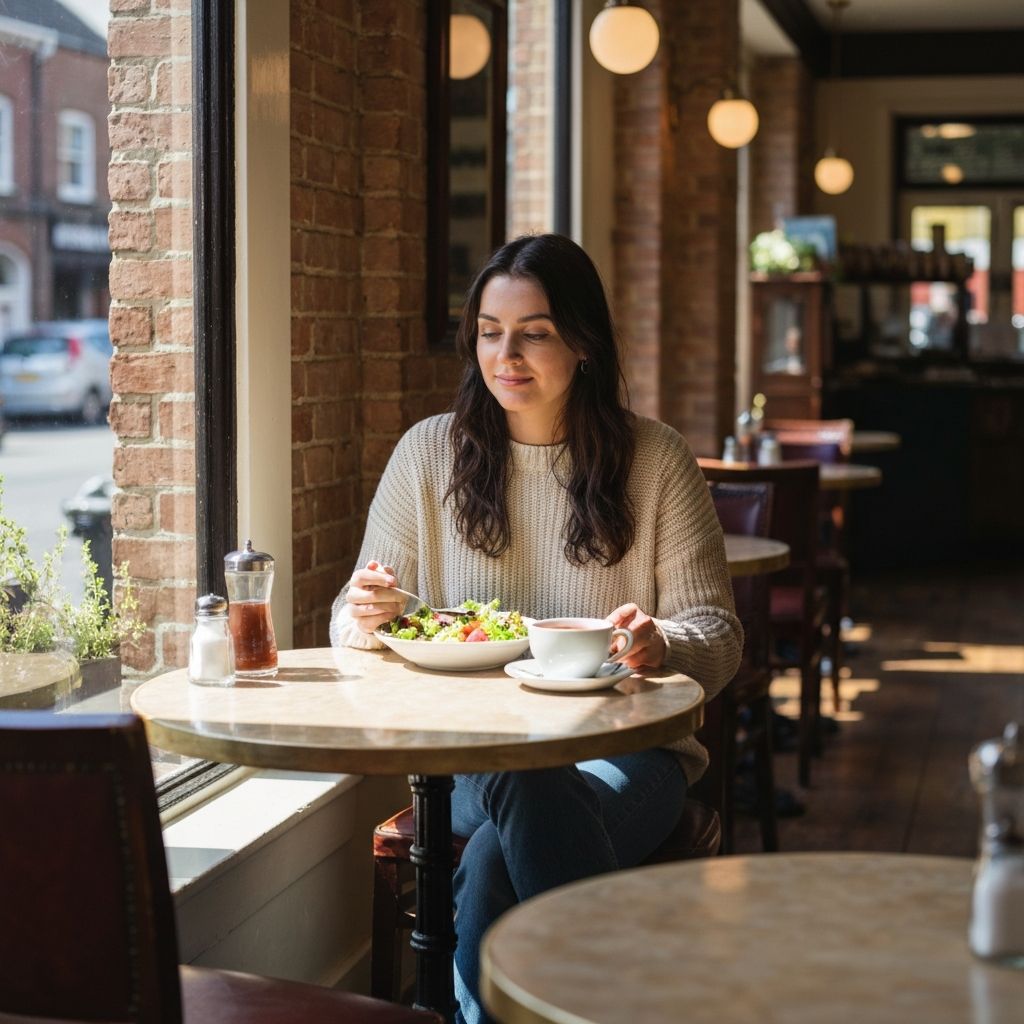
Woman relaxing at café with healthy lunch and tea
Eating Out
Calm choices in public spaces. Rest is part of nourishment.

Two people sharing a meal together, collaborative atmosphere
Shared Connection
Food as dialogue. Partnership at the table.

Person enjoying peaceful walk in park after meal
Restorative Movement
A walk that feels good. Movement without punishment.

Roles: What You Do, What We Do

Your part

You bring your life. Your patterns, your preferences, your reality. You attend to how food feels in your day—what works, what doesn't, where you feel stuck. You show up with honesty about your experience.

Our part

We listen. We ask clarifying questions. We help you see your own patterns more clearly. We offer practical options, not rules. We adapt as you learn more about yourself. We support without directing—because we know you're the expert in your own life.

Together

This is dialogue. Not instruction. Not judgement. Real conversation about real choices. We work within your world, not asking you to remake it. Partnership means we both take responsibility—you for your choices, us for understanding them well.

Choices in Public: Eating Out Without Pressure

Eating out is part of life. Social meals, work lunches, time away from home—these happen regularly. Partnership means eating out stays calm.

The reality

You can't control every variable in a restaurant. You don't need to. The aim isn't perfection in public; it's ease. That means choosing restaurants where you feel comfortable, ordering what genuinely appeals to you, and eating with attention rather than anxiety.

What helps

Knowing in advance what appeals to you at familiar places. Having a sense of what you want before you arrive. Eating the full meal without negotiating with yourself. Recognising that one meal doesn't determine your health or relationship with food. Staying curious about what feels good rather than policed.

Portion Comfort: Enough, Not Perfect

Portion size is one of the most anxious conversations around eating. Our partnership reframes it entirely.

Not about control

Portions aren't about restriction. They're about noticing—when you feel satisfied, energised, comfortable. Sometimes that's more food, sometimes less. The point is listening to your own signals rather than following external measurements.

Finding your rhythm

Over weeks, you'll notice patterns. What leaves you satisfied for a few hours? What feels too heavy? What leaves you hungry? This information is yours alone. Our role is helping you notice it clearly, not imposing a standard that came from someone else's body.

Home Routines That Reduce Effort

Food habits change when they become easier, not when they require constant willpower. The best routines are the ones built into your life so naturally that they barely feel like routines.

Small changes first

Which one thing could be simpler this week? One meal you could prepare without effort. One snack you'd enjoy having ready. One time you could sit down without rushing. Tiny shifts compound over time.

Your environment matters

If certain foods are in view, you'll reach for them. If cooking feels overwhelming, you'll order takeaway. These aren't failures—they're signals. Partnership means working with your environment rather than expecting willpower to override it.

Good-Enough Planning for Busy Weeks

Planning doesn't mean rigid meal prep. It means knowing roughly what will happen so you're not caught unprepared.

What "good-enough" looks like

You know what's in your kitchen. You have a few meals you can make without thinking. You've identified which evenings are rushed and what works on those nights. You know one café where you can grab lunch. You're not planning every detail; you're creating scaffolding that lets you eat calmly even when life is busy.

Flexibility is built in

Plans change. You'll have unexpected meals out. You'll skip a prepared meal. You'll add something new. That's not a plan collapse—that's life. Good-enough planning means you have a structure flexible enough to accommodate reality.

The Process, Clearly Framed

Partnership moves through predictable phases. Understanding them helps you know what to expect.

Clarify

What's actually happening now?

Observe

What do you notice?

Adjust

What could shift?

Support

How do we hold this?

Review

What's changed?

These phases overlap. You might clarify something new while adjusting something else. The process isn't linear—it spirals. But each turn brings more understanding and more ease.

About Us

Torviaqz is a nutrition-focused advisory project built on partnership. We work with people through real dialogue—listening carefully to your life, your patterns, your reality. We offer practical guidance based on what actually works for you, not on external standards or promises.

Our work is rooted in adaptation. We know that people, circumstances, and needs change. That's why we move with you rather than asking you to fit a fixed approach. We support steady, realistic progress over dramatic change.

We don't promise results. We can't transform your relationship with food overnight. What we do is create space for you to understand yourself better, make choices that feel sustainable, and build routines that actually fit your life. This is work that happens in conversation—with clarity, honesty, and shared responsibility.

There are no shortcuts here. There's just the genuine work of learning what nourishes you and building a life where that's possible.

Reflection Questions

These questions might help clarify what partnership on food could mean for you.

1. What one thing about eating would you most like to feel easier about?
Not perfect—easier. Where does it currently feel hard?

2. When do you feel most at ease around food?
What's present in those moments? What's different?

3. What support would actually help, rather than what you think should help?
There's a difference. Which matters more to you?

4. How do you know when eating is working for you?
Not looking a certain way—actually working. What does that feel like?

5. What's one small routine that could become easier this week?
Not a complete overhaul. One shift. What is it?

Get in Touch

Thank you for reaching out. We've received your email and will be in touch soon.

This form is used for informational updates only. We do not sell directly or share your information.

Torviaqz

9 Broad Street
Birmingham B1 2HF
United Kingdom

Phone: +44 121 759 2483
Email: [email protected]